Peter Yeo

Peter Yeo, President of the Better World Campaign and Senior Vice President at the United Nations Foundation, leads the Foundation’s strategic engagement with the U.S. Congress and Administrations to advance policy changes that support the UN’s work for global progress. Although there are many myths about the UN, recent polling shows that 52% of Americans have a favorability rating of the UN. The UN affects all inhabitants of the planet with its valuable programs to assist refugees, combat climate change, provide humanitarians assistance, control diseases, and help move aircraft, ships, mail and weather information in international space. When the UN Security Council was paralyzed re: Ukraine, several UN agencies worked on the front lines to provide food, medicines and other humanitarian needs. The UN is striving to improve its coordination, transparency and accountability to be more effective and efficient. If the UN did not exist, we would have to create it tomorrow. 

Laura Hagg

Laura Hagg, Director for Capacity Building and Governance with the International City County Management Association (ICMA), has a career of more than 30 years of experience in the public, private, and non-profit sectors in the United States and internationally in the fields of local governance, economic development, public outreach, communications, and strategic policy efforts. Technical assistance programs are mutually beneficial to the US and the host country. Previously she worked in 16 cities in Ukraine to develop investment videos and encourage foreign investments. Given the massive amount of misinformation and disinformation, one of the greatest challenges is the anti-democratic phenomenon and the attacks on the Rule of Law, free speech and democratic elections, as opposed to an autocratic state that represses these freedoms. The media and educational systems have a responsibility to inform the public as to the opportunities of technical assistance programs, as well as beneficial organizations such as the United Nations.


Norman Solomon

Norman Solomon, American journalist, media critic, author and activist, discusses his latest book, “War Made Invisible: How America Hides the Human Toll of Its Military Machine.”  Mr. Solomon was actively involved in launching RootsAction and the Institute for Public Accuracy. His main contention is that the governments and media inundate the public with unrealistic and false propaganda regarding the horrific nature and devastation of wars. Examples include President Bush’s illegal invasion of Iraq, as well as the terrible situations in Ukraine and the Israeli-Hamas war. Often, news media encourage the public to choose up sides, blindly accept the misinformation and ignore the diplomatic option to promote peace.  To end these conflicts, the US should re-prioritize its support of Ukraine and Israel and abide by the Leahy Amendment. If the public learns about the horrors of war, we will exert more influence upon the media and policymakers, as well as have a better-informed public.

Dr. Dale C. Copeland

Dr. Dale C. Copeland is a professor of international relations with a focus on trade, war and economic interdependence. His recent book is “A World Safe for Commerce: American Foreign Policy from the Revolution to the Rise of China.” He discusses how trade dynamics have influenced America's approach to peace and conflict throughout history. By focusing on the current geopolitical landscape, particularly with regards to China, he reflects the historical tensions and opportunities of centuries of international trade and commerce. A major challenge is the delicate balance between expanding influence for resource access and avoiding trade disruptions that could lead to armed conflict. One suggestion is to improve the overall trade expectations as a means to foster long-term peace and stability between nations, as well as comprehending interactions of globalization. Throughout history, many countries have shifted from peaceful policies to coercion and force in the pursuit of trade interests.

Dr. Peter Layton

Dr. Peter Layton is a Visiting Fellow at the Griffith Asia Institute, Griffith University, Brisbane Australia; a Royal United Services Institute Associate Fellow; London and a Fellow of the Australian Security Leaders Climate Group Canberra. He has extensive aviation and defense experience. His research interests include grand strategy, national security policies particularly relating to middle powers, defence force structure concepts and the impacts of emerging technology. He is the author of the book “Grand Strategy” and co-author of “Warfare in the Robotic Age.” Advances in robotics are profoundly reshaping the world but so are any other things and not all of them are technological. The character of warfare will be different in the robotic age but the nature of warfare remains Clausewitzian, that is war is waged for political objectives. Robots may be considered as machines able to perform four basic tasks: sense, think, act and communicate.

Jonathan Granoff

Jonathan Granoff, president of the Global Security Institute, highlights the need to focus on the Rule of Law rather than Rule of War. The United Nations, although it is not perfect, is the only international organization that brings together countries of the world to deal with nuclear proliferation, climate change, human trafficking, poverty, hunger, empowering women, and scores of other challenges. Currently, there are about 13,000 nukes controlled by 9-nuclar power states. Many countries are moving to expend trillions of dollars to modernize their nuclear stockpiles, which will add to the proliferation . Given that the US and Russia have withdrawn from several major international treaties, this creates an even more dangerous world. The danger is even more severe when the Russian president denies the sovereignty of Ukraine and the former U.S. president basically ignored or violated international laws and treaties. There is a lack of trust among the nations.

John Feffer

John Feffer, author of Splinterlands and current director of Foreign Policy in Focus at the Institute for Policy Studies, summarizes how Donald Trump pursued illiberal internationalism versus liberal internationalism of Joe Biden. Trump was semi-isolationist, cavorted with authoritarian leaders, and wanted to militarize the border between the US and Mexico. Biden’s emphasis was to engage the US in the world through involvement in the UN, WTO and other multilateral institutions. The Israeli-Hamas War has resulted in over 30,000 deaths and reduced most of Gaza to rubble. Biden has pushed for a two-state solution, working with Saudi Arabia and other Arab countries. It was alleged that 13 of the 13,000 employees of UNRWA collaborated with Hamas, which has prompted an automatic reaction of the US and some other funders to withdraw their financial support. On another front, Republican Speaker of the House Johnson has refused to bring up a bill funding assistance to Ukraine.

Dr. Augusto Lopez-Claros

Dr. Augusto Lopez-Claros, Executive Director of the Global Governance Forum, highlights his recent book,, “Global Governance and the Emergence of Global Institutions for the 21st Century.” Global institutions, such as the United Nations, confront the world’s major problems, such as climate change, Israeli-Hamas War, Russian invasion of Ukraine, attacks on democracies, and nuclear proliferation. The United Nations has been the epicenter of confronting on these problems. Unfortunately, many national goals are not in conformance with international goals. Also, there is an unraveling of the nuclear arms treaties over the last 30-years. UN Secretary General Antonio Guterres called for the “Summit of the Future Conference” in September to deal with many of these problems. To be more successful, the UN must begin to reform the institution, especially the Security Council, as well as to discuss overhauling the UN Charter. The main challenges are to protect democracy in the UN and worldwide and have a more carbon-free lifestyle.

David Betz

David Betz is Professor of War in the Modern World in the Department of War Studies, King’s College London, and is a Senior Fellow of the Foreign Policy Research Centre. His most recent book is “The Guarded Age: Fortification in the 21st Century.” A fortification can be defined as a piece of militarized architecture that focuses an enemy into doing something they normally would not do. Major examples of this might include the Great Wall of China and the border wall between Mexico and the USA. A wall can slow down a foe, but it will not stop individuals unless the wall is secured through another form, such as by human surveillance, drones, or cameras. If not guarded, the barrier will not be very effective. The Iron Curtain was a barrier designed to keep people from moving from the East to the West. Sophisticated surveillance can make physical walls more unnecessary.

Dr. Robert Farley

Dr. Robert Farley has taught security and diplomacy courses at the Patterson School of Diplomacy and International Commerce at the University of Kentucky since 2005. Dr. Farley is the author of Grounded: The Case for Abolishing the United States Air Force and Patents for Power: Intellectual Property Law and the Diffusion of Military Technology.

The Ukraine and Gaza conflicts are two of most intractable problems confronting leaders of the world today. The Israeli-Hamas war in Gaza, ignited primarily due to the massacre by Hamas of mostly Israelis on October 7 has posed a major quandary for President Biden, given he is juggling U.S. support of Israel but still trying to moderate the Israeli military response, which has been criticized internationally as disproportionate. A small but vocal group of Republicans in the US Congress has temporarily derailed funding for Ukraine, which directly benefits Putin, and indirectly assists China and North Korea.

Kris Kimel

Kris Kimel is the Founder of Humanity in Deep Space, an initiative exploring the challenges and hard problems facing humans as we transition to deep spacefaring species. He is the Co-founder of the commercial space company Space Tango. His major focus is how humans can do deep space exploration physically, safely, and ethically. Legal, ethical and physiological concerns are some of the most challenging. Today, the United Nations’ 1967 Outer Space Treaty, which was the foundation of the discussions, was a far-reaching concept by UN member states to provide the framework as how we can explore and develop outer space, but to do so peacefully, safely and sustainably. Key questions: Who can own parts of outer space? How can outer space be utilized without militarizing it with nuclear weapons? How can we keep our humanity? The United Nations and UNESCO have some of the best research information on outer space.

Ward Wilson

Ward Wilson, founder and executive director of RealistRevolt, is widely acknowledged as one of the leading sources of innovative pragmatic arguments against nuclear weapons. The title of his recent book is “It Is Possible: A Future Without Nuclear Weapons.” Nuclear weapons, of which there are about 13,000, are some of the most devastating threats on Earth. The nine nuclear countries are: the USA, Russia, China, UK, France, North Korea, Israel, India and Pakistan. The main thrust of his book is that while damage and destruction of nukes is real, their utility and importance have been exaggerated. The United Nations has been in the forefront in promoting treaties, such as the Non-Proliferation Treaty, to limit or eliminate nuclear weapons. Izumi Nakamitsu, Under-Secretary General of UN Disarmament Affairs, leads the effort to forestall a new nuclear arms race. In 2017, the UN began a process on a treaty for the prohibition of nukes.

Yasmine Sherif

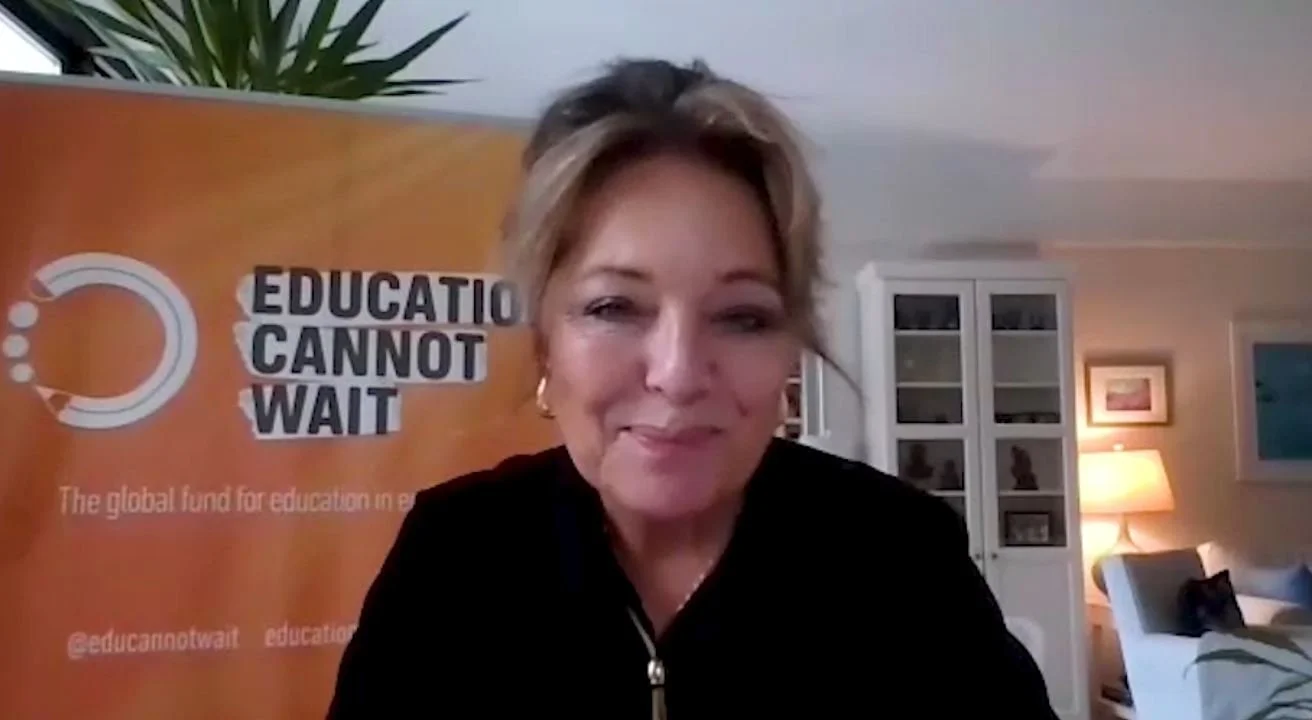
Yasmine Sherif is Director of the Education Cannot Wait (ECW) Program, which is the global fund for education in emergencies and protracted crises. Yasmine Sherif is a lawyer specialized in International Humanitarian Law and Human Rights Law, plus she has over 30 years of experience with the United Nations and international NGOs. ECW’s mission is to generate greater shared political, operational, and financial commitment to meet the educational needs of millions of children and young people affected by crises, with a focus on a more agile, connected, and faster response that spans the humanitarian – development continuum to lay the ground for sustainable education systems. A few years ago, Education Cannot Wait (ECW) released a shocking new Global Estimates Study, which revealed that there are now 222 million crisis-affected children and adolescents in need of urgent, educational support; a significant increase from the estimated 75 million children in 2016.

Rolf Schwarz

Rolf Schwarz has served as political adviser for the Middle East and Africa at NATO Headquarters and as professor at the NATO Defense College. He currently is senior adviser at the Organization for Economic Cooperation and Development. Mr. Schwarz holds a Ph.D. in International Relations from the Graduate Institute of International and Development Studies, University of Geneva He is the author of several articles and books, notably a book on state building and post-conflict peacebuilding, as well as articles on sustainable development and United Nations Sustainable Development (SDG) financing. In his most recent book - NATO and the Middle East: In Search of a Strategy – he traces the history of NATO over seven decades and looks at whether NATO has managed to promote regional stability and peace in the Middle East. NATO, has worked closely with the UN and other partners that would project and increase stability in the region.

Ken Heydon

Ken Heydon is a former Australian government trade official and senior member of the OECD Secretariat and a Visiting Fellow at the London School of Economics. His latest book is “The Trade Weapon: How Weaponizing Trade Threatens Growth, Public Health and the Climate Transition”. His earlier works include “The Rise of Bilateralism” and “The Ashgate Research Companion to International Trade Policy.” Trade weaponization usually involves governments in exports and exports and are measures that are applied in a unilateral approach. Generally speaking, sanctions do not work. However, to be more successful, keep the sanctions (stick), but have a carrot accompany the stick. Singapore and Malaysia are cooperating in an exciting project that will see a hydropower project in Borneo, run by Sarawak Energy that exports power to Singapore by submarine cable. The US has had various sanctions against North Korea, Iran and Cuba, for example, that have not achieved their goals.

Harlan Russell Green

Harlan Russell Green, a former Peace Corps Volunteer in Turkey, is the 2023 Winner of the Peace Corps Writers’ Publisher’s Award for his latest book on “Building Community: Answering Kennedy’s Call.” Mr. Green is a Rotarian, retired Mortgage Banker, and Editor/Publisher of Popular Economics Weekly, a financial wire service he began in 2000. The US Peace Corps put him on an international trajectory that provided unique opportunities to work with the US Environmental Protection Agency, Caesar Chavez’s United Farm Workers of America, and several community development projects to create sustainable, livable areas. One of his award-winning films was the “The Great Clean Air Debate.” With the UFWA, he produced “Fighting for Our Lives” and “Why We Boycott.” He also worked on projects with Rotary International and Partnering for Peace, an organization of Returned Peace Corps Volunteers who are now Rotarians that strive to connect Rotary Clubs with Peace Corps Projects.

Felix Dodds

Felix Dodds is Director, Multilateral Affairs at Rob and Melani Walton Sustainability Solutions Service at Arizona State University. He is Adjunct Professor at the Water Institute University of North Carolina and Associate Fellow, Tellus Institute. His Latest book is “Heroes in Environmental Diplomacy: Profiles in Courage.” Mr. Dodds recently attended the United Nations COP28 conference in Dubai. The following UN agencies had key roles in focusing the spotlight on climate change and sustainability: in 1979, the First World Climate Conference was sponsored by the World Meteorological Organization (WMO); in 1988 the WMO and the UN Environment Programme (UNEP) established the Intergovernmental Panel on Climate Change (IPCC); and then the UN Conference on Environment and Development (UNCED) was held in Rio de Janeiro, Brazil in 1992. Two successes of COP 28: formalized the Loss and Damage Fund with over $700 million committed and committed to move away from fossil fuels.

Dr. Michael Cairo

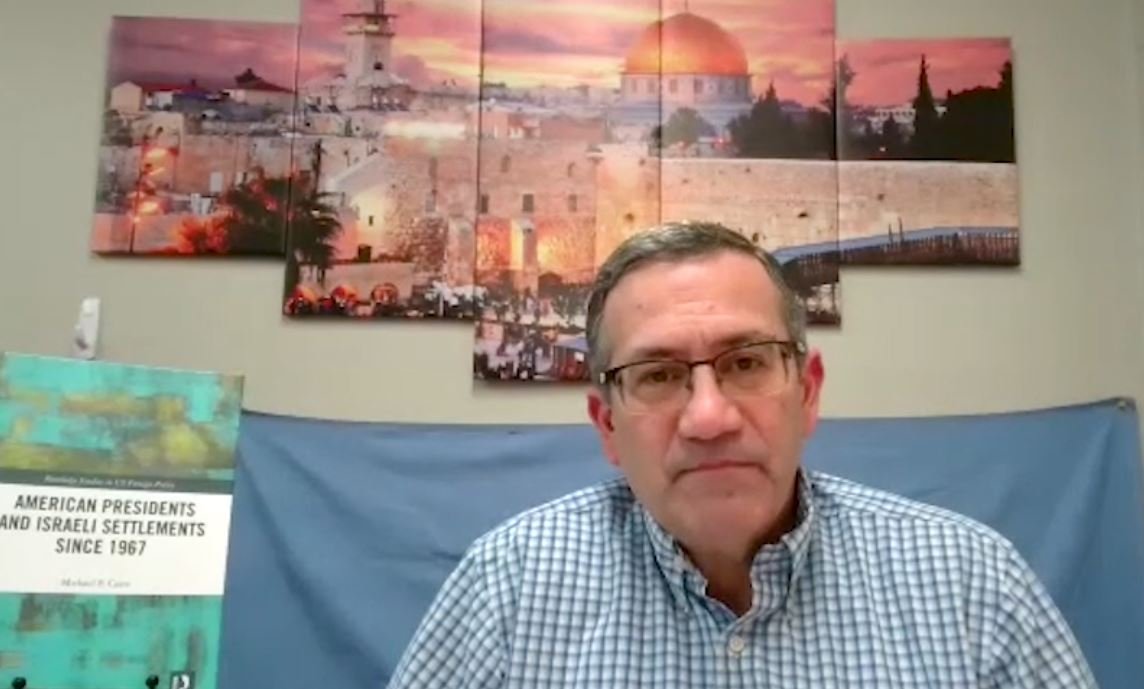
Dr. Michael Cairo, Professor of Political Science and Program Director of International Affairs at Transylvania University’s, most recent book is “American Presidents and Israeli Settlements since 1967.” Events such as Bush illegally invading Iraq in 2003, Trump giving Israel carte blanche and withdrawing from the Iran Nuclear Deal, and Biden ignoring the problem until October 7 contributed to the volatile situation. The UN created Israel and Palestine in 1947-48 and has been involved in working to promote peace through the UN Security Council, UN Relief and Works Agency, World Food Program and other agencies. Several myths were destroyed: Israel was invulnerable and could contain Hamas, and the Abraham Accords would cause Arabs to abandon Palestinians. The world needs to make sure the war is limited, develop trust on both sides, cease horrific carnage and dismantle some settlements with the goal of a two-state solution. As UN Secretary-General Guterres said, “Nothing happens in a vacuum.”

Xiao Yin Zhao

Xiao Yin Zhao is Executive Director of the World Affairs Council (WAC) of Kentucky and Southern Indiana. The Council is a 501 c 3 organization that is part of a network of 90 WACs, all of which are located in the US. In addition to international exchange programs, Xiao Yin has overseen dozens of programs and events that brought top diplomats, experts and authors to the Kentucky-Indiana region, providing the community an opportunity for in-depth discussions on current global issues. Its goal is to provide a wide range of programs that inspire curiosity and impart information. Some of the programs include the International Visitors Program, Sister Cities International (Louisville has 9 Sister Cities) and periodic guest speakers on international issues, such as territorial-regional conflicts, international trade, reverse economic investment, diseases, and climate change. Kentucky is a major player in the international marketplace with the export of vehicles, aerospace equipment, and agricultural products.

Dr. John Casey

Dr. John Casey is a professor in the Marxe School of Public and International Affairs at Baruch College, City University of New York (CUNY). Dr. Casey has been an active practitioner, educator and researcher in the public nonprofit sector in Australia, Spain and the USA for over 20 years. His new book, “The Nonprofit World: Civil Society and the Rise of the Nonprofit Sector,” describes the difference between a nonprofit and an NGO, how most people on Earth are involved in a nonprofit combatting climate change, human trafficking, human rights, international culture and sports and others, and the tremendous growth of nonprofits over the past several decades. Two of his previous books were titled: “Police Leadership and Management” and “Policing the World.” Another important security/public safety entity is the United Nations Peacekeeping Operation which has a need for different military/police skills with each phase of a peacekeeping mission.